THE 7TH INTERNATIONAL
SYMPOSIUM ON THERMAL-FLUID DYNAMICS
(ISTFD 2026)
10-13 July 2026, Xi'an, China


THE 7TH INTERNATIONAL
SYMPOSIUM ON THERMAL-FLUID DYNAMICS
(ISTFD 2026)
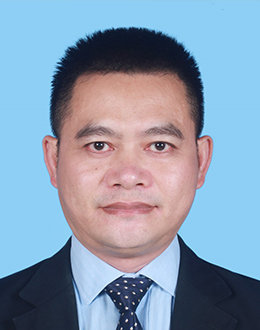
Prof. Yunhua Gan
School of Electric Power Engineering, South China University of Technology, Guangzhou, China
E-mail: ganyh@scut.edu.cn
Bio
Dr. Yunhua Gan is a Professor in Engineering Thermophysics at South China University of Technology, China, and has a membership at the International Combustion Institute, and IEEE.
He received PhD (Engineering Thermophysics) in 2006 at University of Science and Technology of China. He joined South China University of Technology since 2006 as Lecturer (2006-2009)/Associate Professor (2009-2015)/ Professor (2015).
His research interests are focused on microscale heat transfer, microscale combustion, electrohydrodynamics, and thermal management. He has published more than 100 peer-reviewed journals and conference papers, three of which has been selected as the ESI Highly Cited Paper. He has also granted 1 American and more than 40 Chinese patents in the related areas. He has delivered several invited presentations in prestigious international and Chinese conferences.
Title
A study on the thermal performance of three-dimensional vapor chamber heat sink for data center servers
Abstract
With the increasing of heat loads and stricter energy consumption limits for data center servers, traditional heat sinks are becoming inadequate. In this paper, a novel aluminum three-dimensional vapor chamber heat sink of air cooling is developed, in which the evaporator and condenser are connected internally to form a three-dimensional flow channel for working fluid so that two heat transfer methods, phase change and single-phase, are combined in one device. Furthermore, a novel louvered-fin stacked evaporator wick structure and its fabrication process are proposed, which greatly improve thermal performance and temperature uniformity. Thermal characteristics under different heat loads, fan input power, and tilt angles are studied experimentally. Results show that the heat sink has a maximum heat dissipation capability of more than 450W, at which the maximum evaporator surface temperature is within 75℃. The fan input power can distinctly improve thermal performance, heat load impacts overall thermal resistance slightly and the minimum is 0.083℃/W. The tilt angle impacts thermal resistance slightly but significantly affects both the evaporator surface and condenser fin temperature uniformity. Under a tilt angle of 90°, regardless of heat loads, the condenser fin temperature is much lower than other tilt angles.
In the presentation, Prof. Gan will introduce the recent research on thermal management of Lithium Battery and CPU using heat pipe or vapor chamber.