THE 7TH INTERNATIONAL
SYMPOSIUM ON THERMAL-FLUID DYNAMICS
(ISTFD 2026)
10-13 July 2026, Xi'an, China


THE 7TH INTERNATIONAL
SYMPOSIUM ON THERMAL-FLUID DYNAMICS
(ISTFD 2026)
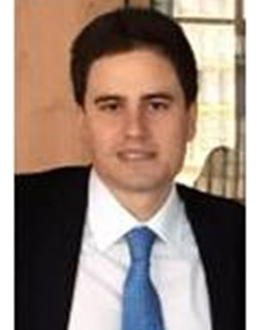
Prof. Iasiello Marcello
Department of Industrial Engineering, Università degli Studi di Napoli Federico II, Italy
E-mail: marcello.iasiello@unina.it
Bio
Marcello Iasiello is Associate Professor in the Department of Industrial Engineering at the University of Naples Federico II, Italy, where he has been a faculty member since 2017. He received both his M.S. and Ph.D. in Mechanical Engineering from the same university and has held visiting positions at the University of Connecticut, the University of California, Riverside, and the Universitat Politècnica de València.
His research focuses on heat transfer and thermal management, with particular emphasis on advanced cooling solutions for electronics and batteries. His interests include numerical conjugate heat transfer and fluid flow, porous materials, thermal energy storage, multi-objective optimization, topology optimization, and thermal-fluid applications in bioengineering. He has co-authored more than 126 publications, including review papers and book chapters, with an h-index of 31 in Scopus.
Prof. Iasiello serves on the editorial boards of several international journals, has been guest editor of special issues including for the International Journal of Heat and Mass Transfer, and is a member of the Scientific Council of the ICHMT. He has received the Italian Union of Thermal-Fluid-Dynamics Prize for the best Ph.D. thesis, several Best Paper Awards at international conferences, and Outstanding Reviewer Awards. Since 2022, he has been included in Stanford University’s annual list of the world’s top 2% scientists. He teaches applied thermodynamics, heat transfer, and energy systems optimization, has served as Principal Investigator and leader of research units in several national and international projects, and is co-chair of the HTFF conference series.
Title
Designing Next-Generation Cold Plates for Thermal Management through Free-to-Morph Design
Abstract
The continuous rise in power density and the increasing compactness of modern electronic systems are turning thermal management into a major engineering challenge in applications such as data centers, AI hardware, and advanced chip cooling. In these contexts, cold plates are required to deliver high thermal performance while simultaneously meeting multiple and often conflicting constraints, including limited space, pumping-power consumption, pressure-drop penalties, safety requirements, and manufacturability. As these demands become more severe, conventional design approaches are progressively reaching their limits.
This keynote will discuss the evolution of cold-plate architectures for advanced thermal management, starting from the fundamentals of thermal design and moving towards emerging design strategies enabled by increasingly flexible material distribution. In this framework, a range of approaches will be reviewed, including architected cellular materials, metamaterials, topology optimization, and more recent field-based design concepts. Particular attention will be devoted to methods that combine high design freedom with engineering constraints, with the aim of improving thermal performance while balancing hydraulic efficiency, weight, safety, and manufacturing feasibility.
Within this perspective, free-to-morph design will be presented as a unifying concept for the development of next-generation thermal-management solutions. The central question is straightforward: how should material be distributed within a given design space to achieve the best overall performance under realistic operating and design constraints? The talk will finally highlight the main opportunities, current limitations, and future directions of this evolving design paradigm.