THE 7TH INTERNATIONAL
SYMPOSIUM ON THERMAL-FLUID DYNAMICS
(ISTFD 2026)
10-13 July 2026, Xi'an, China


THE 7TH INTERNATIONAL
SYMPOSIUM ON THERMAL-FLUID DYNAMICS
(ISTFD 2026)
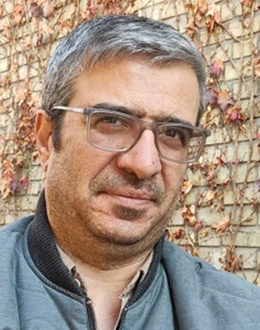
Prof. Mehdi
Shahid Rajaee University and University of Antwerp
E-mail: mehdi.neek-amsl@uantwerpen.be
Bio
Mehdi Neek-Amal completed his Ph.D. in computational physics at the Institute for Research in Fundamental Sciences (IPM), Tehran, through its rigorous theoretical physics program, specializing in computational condensed matter physics. Following a postdoctoral appointment at IPM, he was awarded the prestigious Marie Curie Fellowship in 2012 to continue his research at the University of Antwerp. He later joined Shahid Rajaee Teacher Training University as Assistant Professor while remaining a long-term guest professor at Antwerp. His research focuses on graphene membranes, nanofluidics, and the thermo-electro-mechanical properties of carbon nanostructures. He has developed theoretical and computational models for confined water, graphene interfaces, and nanofiltration systems using molecular dynamics, Monte Carlo simulations, and density functional theory. His work includes the prediction of oscillatory effective viscosity in nanoconfined water and extensive collaborations with researchers at Manchester, Antwerp, and Arkansas universities. He has received several national and international research grants and has organized numerous scientific conferences.
Title
Layering Theory of Liquids at Solid Interfaces: Interfacial Layering Oscillator Model
Abstract
The structural organization of liquids near solid interfaces profoundly influences phenomena such as wettability, nanofluidic transport, and interfacial heat transfer. This study introduces the Interfacial Layering Oscillator Model (ILOM), a concise, semi-phenomenological framework that accurately captures the oscillatory density profiles of liquids adjacent to planar solid surfaces. By deriving a second-order differential equation rooted in classical statistical mechanics and calibrated with molecular dynamics simulations, ILOM predicts the amplitude, decay rate, and wavelength of interfacial density layering with exceptional computational efficiency. This versatile model applies to both hydrophilic and hydrophobic surfaces and extends to liquids beyond water, including methanol, providing valuable insights into critical interfacial properties that advance nanoscale fluid mechanics and material design.