THE 7TH INTERNATIONAL
SYMPOSIUM ON THERMAL-FLUID DYNAMICS
(ISTFD 2026)
10-13 July 2026, Xi'an, China


THE 7TH INTERNATIONAL
SYMPOSIUM ON THERMAL-FLUID DYNAMICS
(ISTFD 2026)
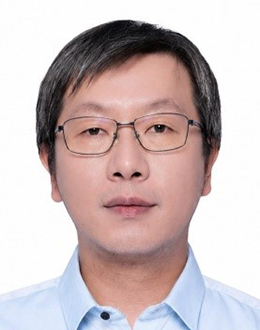
Prof. Qixing Wu
Shenzhen University, China
E-mail: qxwu@szu.edu.cn
Bio
Prof. Wu is a Professor at the School of Chemistry and Environmental Engineering, Shenzhen University. He received his Ph.D. and completed postdoctoral research in Mechanical Engineering at The Hong Kong University of Science and Technology. During his doctoral studies, he received the HKUST PhD Research Excellence Award and was shortlisted for the Young Scientist Award of the Hong Kong Institution of Science. His research focuses on interdisciplinary electrochemical energy systems, including fuel cells, redox flow batteries, and lithium-ion batteries, with particular interests in transport phenomena, reaction mechanisms, and performance optimization. He has published over 70 SCI papers in leading journals such as Energ. Environ. Sci., ACS Energy Lett., Small, J. Power Sources, and Int. J. Heat Mass Trans. He has led multiple projects funded by the National Natural Science Foundation of China, Guangdong Province, and Shenzhen Municipality.
Title
Operando Field-Resolved Reactive Transport in Flow Battery Electrodes
Abstract
Spatially non-uniform reactions in redox flow battery (RFB) electrodes limit active-material utilization, power density and scale-up, yet their pore-scale origins remain difficult to quantify under operating conditions. Here, we combine operando fluorescence state-of-charge (SOC) mapping with large-scale, real-structure pore-scale multiphysics modelling to investigate reactive transport in carbon based fibrous electrodes. Fluorescence measurements provide field-resolved SOC distributions, while LBM–FVM simulations resolve the corresponding 3D flow, species transport, electrolyte/solid potentials and interfacial-current fields, enabling direct field-level comparison between operando observations and pore-scale reactive-transport predictions. This integrated framework links electrode microstructure, internal transport and reaction distribution, providing a field-resolved basis for in silico electrode design beyond bulk performance metrics.