THE 7TH INTERNATIONAL
SYMPOSIUM ON THERMAL-FLUID DYNAMICS
(ISTFD 2026)
10-13 July 2026, Xi'an, China


THE 7TH INTERNATIONAL
SYMPOSIUM ON THERMAL-FLUID DYNAMICS
(ISTFD 2026)
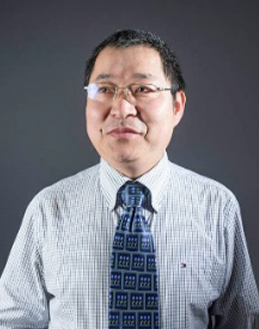
Prof. Lixin Cheng
School of Engineering and Built Environment, Sheffield Hallam University, UK
E-mail: lixincheng@hotmail.com
Bio
Lixin Cheng obtained his Ph.D. degree in Thermal Energy Engineering at the State Key Laboratory of Multiphase Flow in Power Engineering at Xi’an Jiaotong University, China in 1998. He has extensive international working experience at several leading universities in China, UK, Netherlands, Germany, Switzerland and Denmark for more than 26 years. He has received several prestigious awards such as Alexander von Humboldt Fellowship in Germany in 2006, an ERCOFTAC Visitor Grant in Switzerland in 2010, an Oversea Talent Professorship of the City of Beijing, China in 2016-2026, the Best Paper Award of the 6th World Congress on Momentum, Heat and Mass Transfer (MHMT’2021) in 2021 and the Best Paper Award of the Journal of IET Smart Energy Systems in the year of 2025. He was chair of the 11th World Conference on Experimental Heat Transfer, Fluid Mechanics and Thermodynamics (ExHFT-11), August 15-18, 2025, Beijing, China. He is the congress chair of the World Congress on Momentum, Heat and Mass Transfer (MHMT) since 2017. He is associate editor of Heat Transfer Engineering, Journal of Fluid Flow, Heat and Mass Transfer and IET Smart Energy Systems, and an international advisor of Thermal Power Generation (a Chinese journal). He is guest editor of International Journal of Heat and Fluid Flow, Applied Thermal Engineering and Heat Transfer Engineering and several other journals. His research interests are multiphase flow and heat transfer, flow boiling, thermal management and high heat flux cooling, microscale and nanoscale fluid flow and heat transfer, thermal energy engineering, utilization of CO2 for energy systems, decarbonized heating and cooling technology and energy systems and sustainability. He has published more than 140 papers in journals and conferences, 10 book chapters and edited 10 books/e-books. He has delivered more than 70 plenary, keynote and invited lectures at conferences, universities, institutes and industry worldwide. He is a visiting professor of Northwestern Polytechnical University since 2025 and a visiting professor of Xi’an Jiaotong University since 2026 and deliver international lectures at both universities.
Title
Flow Boiling in Microchannels for High Heat Flux Removal: Fundamentals, Technology Development and Challenges
Abstract
With the rapid development of high performance chips in micro-electronics industry, improving integration level and packaging density is important to high performance of chips but also generates extremely high heat flux density. Thermal management of high heat flux is a big issue. Flow boiling in multi-microchannels plays an important role in removing high heat flux in the chips cooling. However, there are big challenges due to the complex two phase flow boiling phenomena and the underlying physical mechanisms. The channel size, shape, aspect ratio, surface condition, fluid physical properties and operation parameters have a significant on the flow boiling heat transfer and two-phase flow phenomena in multi-microchannels. Understanding the fundamentals of the flow boiling heat transfer characteristics, flow regimes, mechanisms, prediction methods and two-phase instability in multi-microchannels is critical in the development of high heat flux removal technology. It is essential to understand the current research status and challenges in experimental and theoretical studies of the relevant topics. In this lecture, comprehensive review and deep analysis of the exiting studies of flow boiling heat transfer and two-phase flow phenomena in multi-microchannel evaporators are presented. First, some experimental heat transfer data are compared and discussed to understand the fundamental phenomena and mechanisms. Then, the existing prediction methods for flow boiling heat transfer in microchannels have been assessed with a database covering the experimental flow boiling heat transfer coefficients in the literature. Next, the two-phase instability phenomena in multi-microchannels are discussed according to the experimental results and observations. In particular, various enhancement techniques for flow boiling in micro/mini-channels have been intensively investigated over the past years. These mainly include various surface modifications, enhanced channel structures and composite enhancement techniques. These techniques are able to improve flow boiling heat transfer coefficient, critical heat flux (CHF) and mitigate two phase flow instabilities. The composite enhancement techniques take the advantage of each individual technique for flow boiling to achieve more efficient heat transfer and stable flow. However, there are challenges to optimizing these techniques and understanding the very complex mechanisms involved in these emerging techniques. Studies of flow boiling enhancement techniques using surface modification techniques and enhanced structures are critically reviewed as well. The effects of surface modification techniques and enhanced structures on flow boiling heat transfer, CHF, two phase flow patterns, two phase flow instability and mechanisms in micro/mini-channels are discussed and analysed. Finally, future research needs have been identified and recommended according to the comprehensive review and deep analysis.